When you buy through links on our articles, Future and its syndication partners may earn a commission.

Europe's plans to develop a robotic lunar lander are moving ahead with the announcement of an Italy-led consortium that will build a key element of the spacecraft designed to secure European access to the moon.
The consortium will develop the Argonaut Lunar Descent Element (LDE), one of three main components that will make up Argonaut. The first mission for Argonaut is scheduled for launch in 2030 atop a European Ariane 64 rocket, with the European Space Agency (ESA) stating that the lander will play a key role in international lunar exploration through supporting the NASA-led Artemis program.
Thales Alenia Space in Italy, a joint venture between Thales and Leonardo, is leading the consortium. Core partners are Thales Alenia Space in France and Thales Alenia Space in the U.K., as well as OHB System AG and Nammo, the latter of which forms part of the consortium as strategic subcontractor for the propulsion system's main engine.
Argonaut will consist of the LDE, a Cargo Platform Element (CPE), and the lander payload. The assembled Argonaut will have a height of 19.7 feet (6 meters), a diameter of 14.8 feet (4.5 m) and a launch mass of nearly 22,046 pounds (10,000 kg), according to ESA. It can carry roughly 3,300 pounds (1,500 kg) to the lunar surface and is designed to land with an accuracy of at least 820 feet (250 m) for the first flight.
Earlier statements indicate a greater payload capacity of up to 4,600 pounds (2,100 kg) and a more precise landing accuracy of better than 330 feet (100 m) for the operational lander. Argonaut is designed to carry cargo, such as food and water for future astronauts, to anywhere on the lunar surface.
Giampiero Di Paolo, deputy CEO and senior vice president of observation, exploration and navigation at Thales Alenia Space, hailed the creation of the consortium as a milestone. "Under the leadership of the European Space Agency and alongside the consortium partners, Thales Alenia Space is playing a pioneering role to enable European autonomous access to the moon," Di Paolo said in an ESA statement.
"A European presence on the moon is a vision we at OHB have been working toward for many years. We are thrilled to play a pivotal role in this mission by contributing essential subsystems to the Argonaut LDE, helping to further advance Europe's space exploration capabilities," said Chiara Pedersoli, CEO of OHB System AG.
Argonaut's first mission is scheduled for 2030, with a first operational lunar flight slated for 2031. As well as supplies for astronauts, Argonaut is designed to be able to adapt to carry a diverse range of payloads, including rovers, technology demonstration packages, lunar resource utilization facilities or even lunar telescopes or power stations.
LATEST POSTS
- 1
 Step by step instructions to Get a good deal on Your Rooftop Substitution Venture
 - 2Extremely Rare Snub-Nosed Monkey Was Just Born for the First Time Outside of Asia
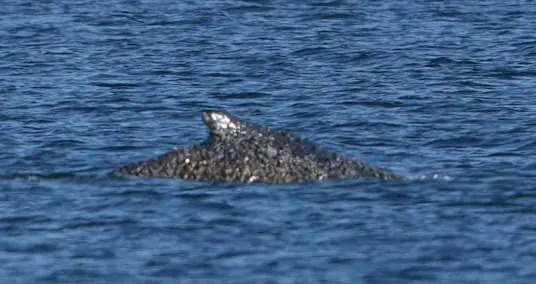
- 3Humpback whale stranded on Germany's Baltic coast frees itself
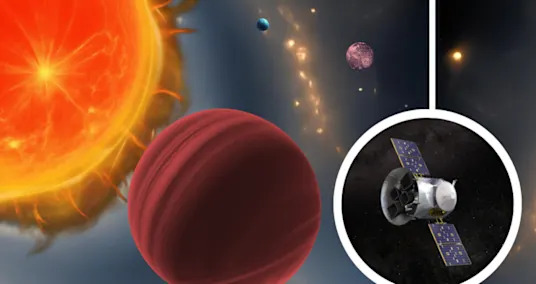
- 4100 new alien worlds: Scientists find hidden haul in data from NASA exoplanet-hunting spacecraft
- 5'Euphoria' Season 3 trailer includes Eric Dane's final appearance, Jacob Elordi and Sydney Sweeney at the altar and Rue's 'Breaking Bad' era



- Israel strikes Iranian nuclear development facilities, Tehran vows retaliation
- Pick Your Number one Sort Of Music
- Amid Iran war, 53 of Israel's future scientists showcase projects in Jerusalem contest
- Ukrainian man arrested in Germany on suspicion of spying for Russia
- Unwinding the Starting points of America: An Excursion Through History
- Meet the Artemis crew in NASA's first astronaut mission to the moon in more than a half-century
- Fuel Price Spike Drives Surge in Used EV Sales in Europe
- Could the Star of Bethlehem have actually been a comet?
- 15 skywatching events you won't want to miss in 2026