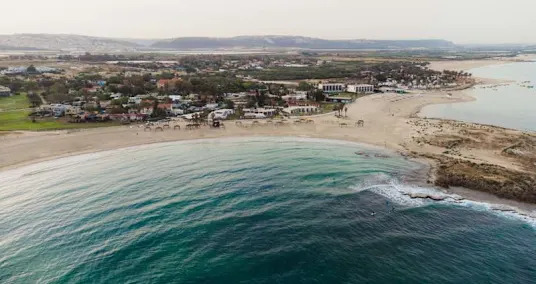
The discovery was made in an ancient shipwreck in the Dor Lagoon near the Carmel Coast, where archaeologists recovered nine pieces of unprocessed iron known as “blooms.”
Researchers from the University of Haifa said Wednesday that an underwater excavation off Israel’s northern Mediterranean coast uncovered what they described as the earliest known cargo of raw iron transported by ship, dating back around 2,600 years, Xinhua reported.
The discovery was made in an ancient shipwreck in the Dor Lagoon near the Carmel Coast, where archaeologists recovered nine pieces of unprocessed iron known as “blooms.” According to the university, the find provides direct evidence of how iron was transported in its earliest commercial stages.
The material was preserved in its original form, having solidified directly in a smelting furnace without undergoing forging or further refinement. Researchers said this distinguishes the cargo from later iron artifacts that typically show signs of shaping or tool-making.
Unlike copper and bronze, which could be melted into liquid form in ancient production processes, iron was heated with charcoal to produce a solid, porous mass. That mass was generally hammered to remove impurities and create denser material suitable for tools and implements.
The recovered blooms showed no indication of that secondary processing stage, suggesting they were transported immediately after production.

Earliest iron shipment discovered in ancient Mediterranean wreck
To determine the age and condition of the cargo, researchers conducted microscopic and chemical analyses.
Radiocarbon dating was also carried out on charred wood embedded in one of the pieces, helping confirm the timeline of the shipment. The findings were published in the journal Heritage Science.
Researchers said the cargo indicates that iron was being moved in raw form from production sites to other locations for further processing, pointing to a level of specialization in ancient manufacturing and trade networks in the Mediterranean.
The University of Haifa said the discovery provides new insight into early iron production and distribution practices in the region.
LATEST POSTS
- 1
 This Week In Space podcast: Episode 189 — Privatizing Orbit
 - 2The 12 biggest space stories of 2025 — according to you
- 3Iran war drives global fertilizer prices up, raising food cost fears
- 4Rick Steves Recommends This German Town's Castle Hotel With Rhine River Views
- 5Europe pledges over €15bn for clean energy for Africa




- West Bank man indicted for extortion, impersonation of IAF pilot, Mossad agent, illegal entry
- Gov’t approves millions for border cities in North under Hezbollah fire
- Instructions to Boost Your True capacity with a Brain research Degree
- Remain Fit: Powerful Wellness and Work-out Schedules for a Better You
- Nutrient Rich Natural products: Lift Your Wellbeing
- Most loved Caf\u00e9 Chain: Where Do You Get Your Caffeine Fix
- Would you ever turn to AI for companionship? 6% of Americans say they could — or already have.
- ‘The White Lotus’ sparked online interest in risky anxiety pills, study says
- The Best Internet Mastering Stages for Expertise Improvement