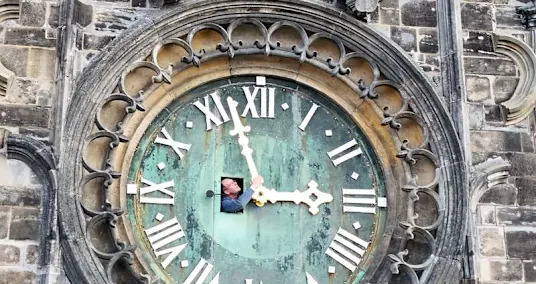
Clocks across the majority of European countries are set to go forward by one hour early on Sunday as the continent moves to daylight saving time, also known as summer time.
Clocks in most European nations including Germany advance by one hour at 2 am (0100 GMT) to 3 am, heralding longer evenings and brighter days.
This means that for the coming months parts of Europe will be on Central European Summer Time (CEST), before moving back to Central European Time (CET) in the autumn, when clocks go back again by an hour on October 25.
The aim of the change is to make better use of daylight in the shorter days of the winter in the northern hemisphere.
The signal for the automatic changeover of the clocks in Germany comes from the Federal Institute of Physics and Metrology (PTB) in the northern city of Braunschweig, also known as Brunswick in English.
The institute's experts ensure that radio-controlled clocks, station clocks and many industrial clocks are supplied with the signal via a long-wave transmitter called DCF77 in Mainflingen near Frankfurt.
LATEST POSTS
- 1
 A Pompeii site reveals the recipe for Roman concrete. It contradicts a famous architect’s writings
 - 2The 20 Most sultry Style of the Time
- 3Story of ‘first Black Briton’ rewritten by advances in ancient DNA technology
- 4China and Pakistan issue five-point peace plan for Middle East
- 5West Palm Beach Shorecrest, renderings of downtown waterfront condo





- Which Kind of Pet Makes the Incomparable Buddy?
- Top German court to rule on claims by Wirecard shareholders
- Step by step instructions to Pick A Keep money with High Fixed Store Loan costs
- UN torture cm'tee report flags Israel for allegedly mistreating journalists, detainees, ex-MAG
- Beyond oil: The crucial exports blocked by Hormuz closure
- Bruno Mars tour 2026: How to get tickets for 'The Romantic Tour,' presale times, prices and more
- Vote In favor of Your Number one Cell phones
- From invasive species tracking to water security – what’s lost with federal funding cuts at US Climate Adaptation Science Centers
- Are your hormones imbalanced? Doctors explain how to know if you need testing